Back to the Basics – Self-Care Tools for Life (after Trauma)
by Pam Fichtner
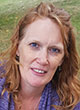
Recently, and with excitement, I led the opening presentation for the Saskatchewan Brain Injury Association Spring Retreat in Saskatoon. I told the participants that I don’t have an acquired brain injury, so I don’t totally understand what they are experiencing, but I do know what it’s like to have a brain that I might not always be able to depend on, and can land me in the hospital. I have epilepsy, and while I haven’t had a seizure for years, I am still aware of it daily. I live with a condition that may cause my body to go out of control at any time, so I do know what it’s like to live with trauma. I have learned over 45 years that what has helped the most is staying with the “Basics”—staying centred, whether you’ve had a trauma, or not.
I did Peter Levine’s training on dealing with trauma in a body-centred way, and I like his definition of it. He describes trauma as, “Anything that is too much, too soon, or too fast for our nervous systems to handle.” The trauma is less about the nature of the event itself, and more about the impact on our nervous system, the overwhelm.
You have probably heard of and felt the various responses that your body can experience after having a traumatic event. Your body can go into fight, flight, or freeze. It is your body’s natural way to deal with it, and at the same time, it can interfere with smooth sailing throughout your day. You might have more difficulty staying present in your body—and you may need an off ramp—a way to down regulate, to stay calm in your body. When our nervous systems are activated, they either become too high, or too low, in how we respond. And, ideally, we want to be somewhere in the middle—where we can act, or react, to what is going on around us, or within us, from a more grounded place.
When dealing with my own trauma, here’s some tips that I have found helpful. These things may sound boring—the usual stuff that you have heard before—but consistency with them is key. They are the cornerstones, as they can help you navigate through the daily stresses.
BACK TO THE BASICS
1. Self-love—It’s number one, even though I know it can be the most difficult to do. You don’t have to like your body, or mind, fully but trying to accept it and your circumstance on a base level, can help you to move forward. After years of dealing with my epilepsy, I finally realized that I was trying to prove to myself, and others, that I was good enough—because I always felt deep down that there was something wrong with me—that I’m not on par with everyone else. I want to tell you now, that no matter what you are dealing with, you are good enough, you are worthy and valued, just for being who you are.
2. Sleep—It is so important that you get enough sleep as it can help you to get through your day. If you can’t get your full eight hours at night, then look at the obstacles. Is it due to pain? If so, do you need a pain medication change? Is it because you are on your computer, or gaming, or social media too much? If so, put it down before you go to bed. You may need to have a nap during the day, if you’re not getting that evening sleep. Rest is necessary to help with nourishment and regulation with your whole body. Try some meditation apps or a CD. You can also talk with your doctor about sleep strategies.
3. Exercise—You have heard this one before, but it really is necessary to help you feel better about all the challenges that you do face in one day, however small or big. I did a yoga training in 2016, and my teacher, Jan Henrikson, said to just do five minutes a day. It really helped me, as it got me on the mat. So, it could be just moving your arms and legs while sitting in your chair, or short walks, dancing to music in the house. Or more scheduled, by going to the gym weekly, or bowling—any activity that you like. Targeted suggestions for exercise are 150 minutes per week, but really, just get moving as they say!
4. Good food—How many of you like eating?! I love to eat too! I just want to remind you how much getting the right intake of protein, fruits, and vegetables can really help with your overall body health. Personally, I have worked on this balance for years—sometimes I eat well, and sometimes not, so I am not advocating for perfection, but working toward getting your plate full of as many colours as possible is good. I like the 80/20 rule—eating well 80% of the time!
5. Support from family and friends—We are all better off with family and friends helping us. We all need that human connection—to be vulnerable with our loved ones, and to allow them to help us in our day, if we need it—with our schedule, going to appointments, and events, and helping with meals, etc. And, the shared experiences of having a good talk, cry, or laugh, or watching a TV show, and enjoying a meal together. Remember that these people are an important part of recovery, rehabilitation, and ongoing life scheduling.
6. Enjoyment of activities— It is so important that you find something that you like to do. It can either be on your own, playing with your cat, or going for a walk, or with family, or friends, celebrating your birthday, or going to the lake, or taking a class together! This sense of finding joy in the world around you, even if it’s small, will help you with connecting to your purpose here on Earth. And that’s meaningful to know that you matter to yourself, and those around you.
Lastly, I want to bring up Complementary Body-Centred Health Sessions: I have done many body-centred sessions that have truly helped me to be in my own body more fully—from craniosacral therapy to counselling. I am a massage therapist myself, so I see the benefits from both the practitioner and the patient perspective, but I know it is not accessible to everyone. Touch is so important, and often a neglected part of one’s healing journey. If you can get a hug from a friend or family member, or ask them to give you a shoulder massage, then give yourself that gift. And, know that you can give yourself kind, loving touch to parts of your body that may be tight, or aching, or painful. That attention and support will be much appreciated!
Hopefully, you can take something from these tips that will lighten your load. Be gentle with yourself, go slow, and bring in the self-love and compassion!
Pam Fichtner is a Registered Massage Therapist and Integrated Health Practitioner, focusing on trauma recovery. She also specializes in Breast Health, offering breast massage therapy and lymphatic drainage. She loves her work, and the people she meets along the way! She works at Broadway Health Collective. Go to Sephirahealing.ca for more information. Also, see the display ads on pages 12 and 13 of the 32.2 Summer 2026 issue of the WHOLifE Journal. |